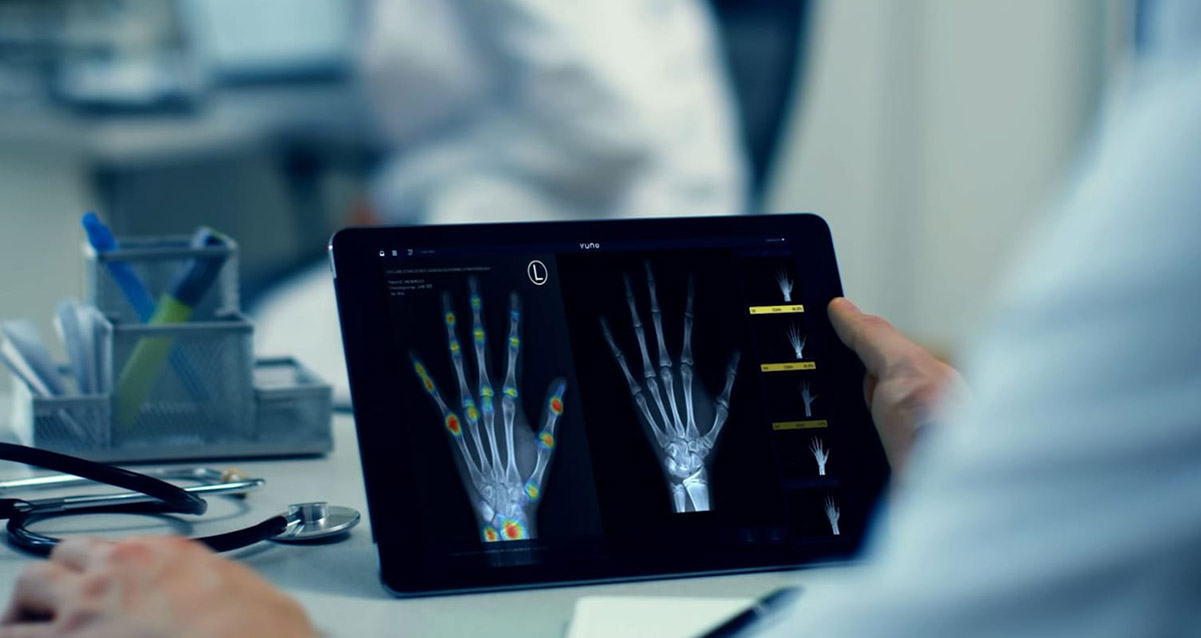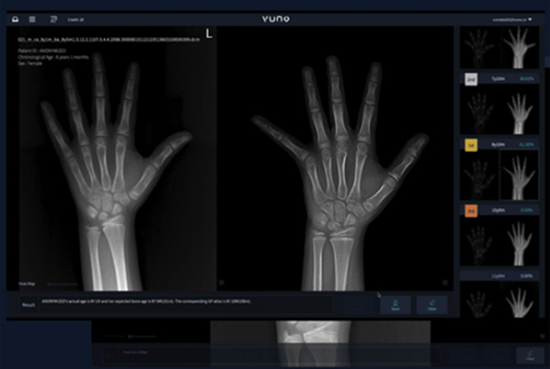
Up to the three most likely bone age results with the highest
probabilities are presented by the software according to the most similar age groups (male: 31 groups, female: 27 groups) defined by the GP (Greulich-Pyle) method.
All doctors have to do is to click the most probable one among the top three options provided by the solution, being spared the time-consuming job of sifting through a reference book.
By providing detailed bone age results on a monthly basis through not only G.P. Atlas but also AI-based bone age results (VUNO Score), it assists in more accurate reading.
• The performance of the BoneAge software was validated by external clinical studies.
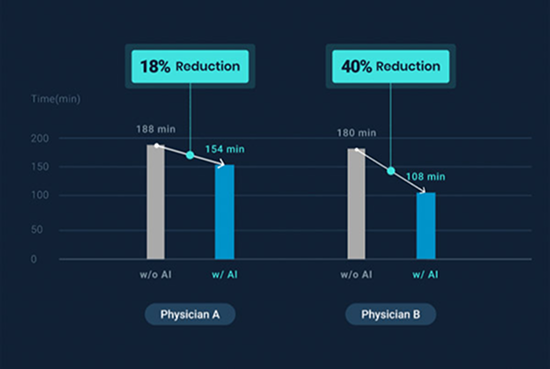
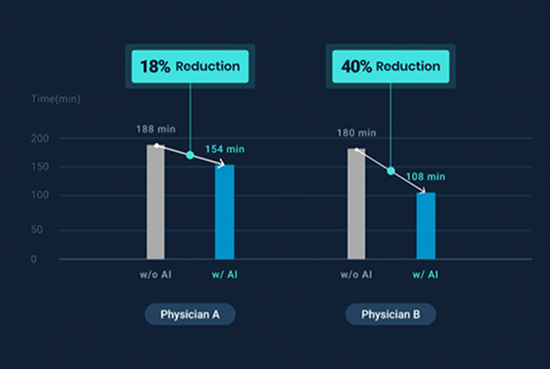
When implemented for a second opinion in daily clinical practice, radiologists' reading times were reduced by 29% on average without compromising the accuracy of bone age estimation.
Reading times were reduced by 18.0% and 40.0% for reviewers.
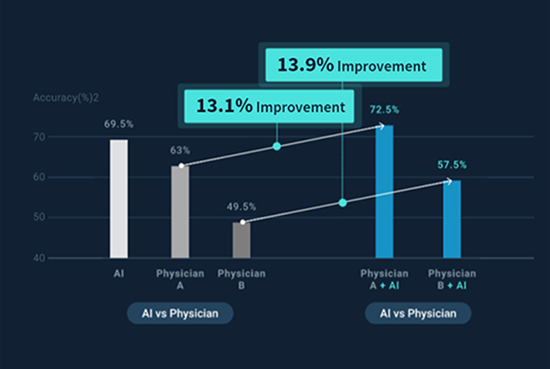
In addition to reading time reduction, VUNO Med-BoneAge improves reading consistency among doctors by more than 13%.
These concordance rates increased with the use of the product for both reviewer 1 (from 63.0% to 72.5%) and reviewer 2 (from 49.5% to 57.5%)
Almost all cases (93%) were within the Top 3 results suggested by VUNO Med®-BoneAge™ and 69.5% cases were Top 1.
• Provides analytic information on whether the patient is within the normal range based on the BoneAge™ results and chronological age
• Easy to explain to patients as the report provides a visual graph on projected final height based on the results and patient information such as age, current height and gender
• Two types of reports: A short summary with analysis results only and a comprehensive report including all related information on height projection


Digital ova and parasite identification assistance for diagnosis


Enhancing Neurological Diagnostics with AI


AI that empowers clinicians with a second pair of eyes.


Automatically detects and reports major cardiac and pulmonary abnormalities on X-rays.